

India’s cultural landscape is shaped not only by its monuments and temples but also by its festivals—living traditions that have flowed uninterrupted through centuries. Among these, Makar Sankranti holds a unique place. It is one of the few Indian festivals governed by the solar calendar, rooted deeply in astronomy, agriculture, spirituality, and collective memory.
Makar Sankranti 2026 invites us to look beyond celebration and understand why this ancient festival continues to remain relevant in a rapidly changing world.
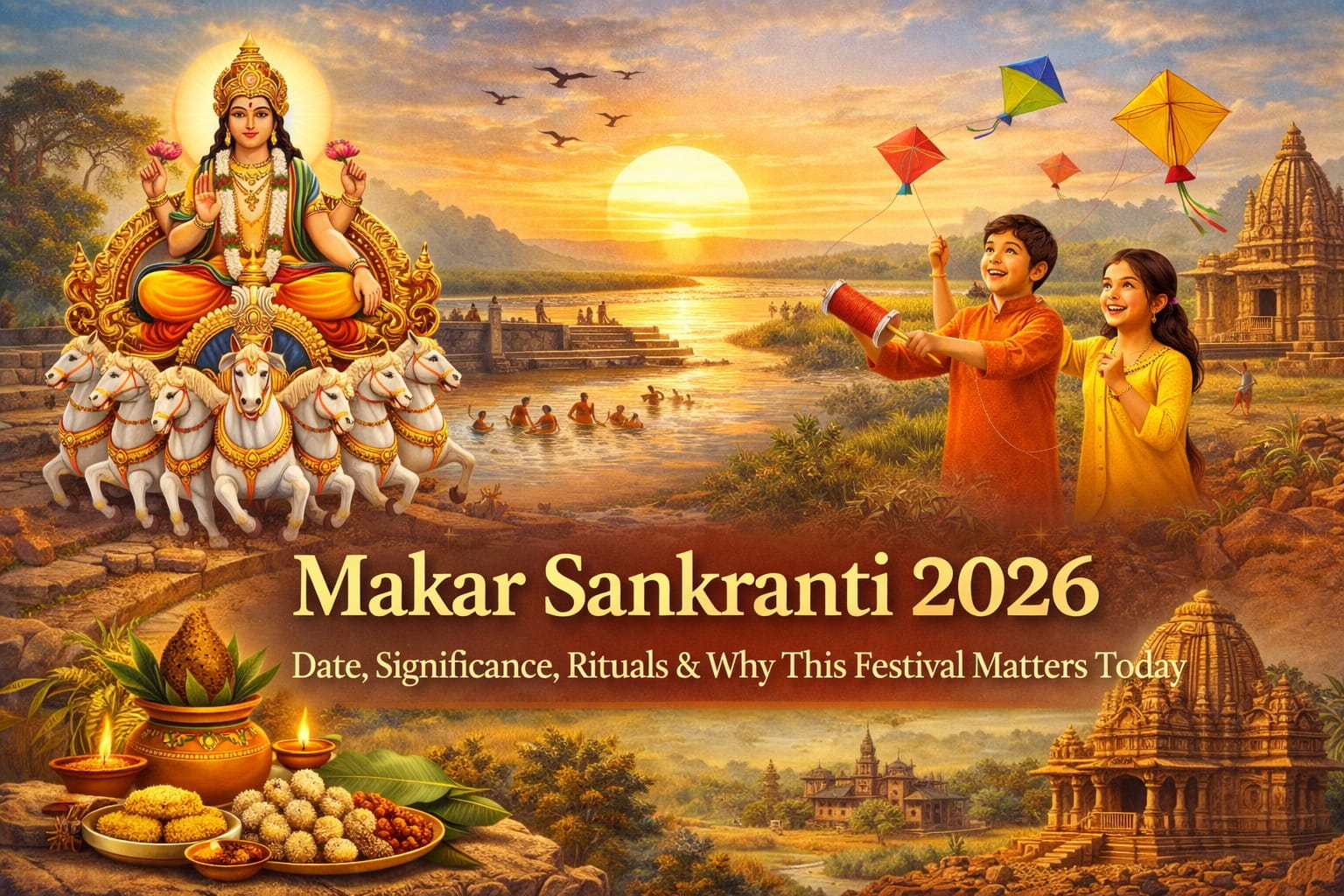
Makar Sankranti 2026: Date and Astronomical Context
Date: 14 January 2026 (Wednesday)
Makar Sankranti marks the moment when the Sun transitions from Sagittarius (Dhanu Rashi) to Capricorn (Makar Rashi). This movement initiates the Uttarayana, the Sun’s northward journey—considered an auspicious phase in Indian philosophy.
Unlike most Hindu festivals, which shift each year according to the lunar calendar, Makar Sankranti occurs around the same date annually. This consistency highlights India’s ancient mastery of solar astronomy and timekeeping.
The Deeper Meaning of Uttarayana
In Indian thought, the movement of the Sun is not merely astronomical—it is symbolic.
• Darkness gives way to light
• Inertia shifts toward growth
• Introspection turns into action
Ancient scriptures associate Uttarayana with awakening, spiritual clarity, and positive transformation. It is believed that deeds performed during this period carry heightened spiritual merit.
This belief finds reflection in temple traditions, pilgrimage practices, and seasonal rituals observed across the subcontinent.
Makar Sankranti and India’s Agricultural Soul
India’s civilization has always been agrarian at its core. Makar Sankranti aligns closely with the harvest cycle, marking a moment of gratitude after months of labor in the fields.
For farming communities, this festival represents:
• Completion of a major agricultural phase
• A pause between cycles
• Thankfulness to the Sun, soil, and seasons
From ancient granaries to rural temples dedicated to Surya and local deities, Makar Sankranti reflects a harmonious relationship between humans and nature—an ethos increasingly relevant today.
Rituals Rooted in Heritage
Sacred Bathing and River Traditions
Bathing in rivers such as the Ganga, Godavari, Krishna, and Kaveri is central to Makar Sankranti. These rivers are not merely water bodies but cultural lifelines, shaping settlements, temples, and pilgrimage routes.
The ritual signifies purification—physical, emotional, and spiritual.
Sun Worship
Surya worship predates many later religious traditions. Stone carvings, ancient temples, and forgotten shrines across India testify to the Sun’s central role in early spiritual life.
Makar Sankranti renews this ancient relationship with the cosmic source of life.
Til and Jaggery: A Cultural Symbolism
The custom of consuming til (sesame seeds) and jaggery is both practical and philosophical.
• Sesame provides warmth during winter
• Jaggery offers nourishment and energy
Symbolically, the ritual teaches balance—strength tempered with sweetness. Across regions, the message remains consistent: relationships, like life, thrive on warmth and harmony.
Regional Expressions of a Shared Heritage
Makar Sankranti is celebrated under different names, each shaped by local history and geography:
• Pongal in Tamil Nadu reflects Dravidian agricultural traditions
• Uttarayan in Gujarat transforms the sky into a canvas of community celebration
• Lohri in Punjab echoes fire rituals and agrarian joy
• Magh Bihu in Assam blends tribal roots with agrarian customs
Despite variations, the underlying essence remains unchanged—gratitude, renewal, and collective belonging.
Temples, Forgotten Shrines, and Solar Alignment
Across India, many ancient temples are aligned with solar movements. On or around Makar Sankranti, sunlight illuminates sanctums in ways that reflect advanced architectural and astronomical knowledge.
Some of these temples lie forgotten today—tucked away in villages or overshadowed by time—yet they silently preserve India’s scientific and spiritual heritage.
Makar Sankranti offers an opportunity to rediscover these spaces and reconnect with the wisdom embedded in stone.
Why Makar Sankranti Matters in the Modern World
In an age dominated by artificial light, digital schedules, and constant motion, Makar Sankranti reminds us to realign with natural rhythms.
It encourages:
• Awareness of seasonal change
• Respect for sustainable living
• Reflection before renewal
The festival gently nudges us to pause, reassess, and move forward with clarity—values as essential today as they were centuries ago.
Cultural Continuity in a Changing India
Festivals like Makar Sankranti act as living archives. They carry forward stories, beliefs, and practices that monuments alone cannot preserve.
They connect:
• Rural and urban India
• Past wisdom and present realities
• Nature and human aspiration
In preserving such festivals, we preserve not just rituals but the philosophy of balance and coexistence that defines Indian civilization.