

Krishna Janmashtami is one of the most loved and spiritually significant Hindu festivals in India. The celebration marks the birth of Lord Krishna the eighth incarnation of Lord Vishnu who is believed to have been born at midnight on Krishna Paksha Ashtami to Devaki and Vasudeva in Mathura
Every year devotees observe a fast decorate their homes and temples worship Bal Gopal sing Krishna bhajans read the Bhagavad Gita and Bhagavata Purana and wait until midnight to celebrate the divine birth of Kanha.
In 2026, however, many devotees may be confused about whether Janmashtami should be celebrated on September 4 or September 5, when the fast should be observed and which day is meant for Nandotsav and Dahi Handi. This detailed guide explains the Janmashtami 2026 date Ashtami Tithi Rohini Nakshatra, Vrat day Puja Muhurat Parana regional celebrations and spiritual significance in a clear and easy-to-understand way.
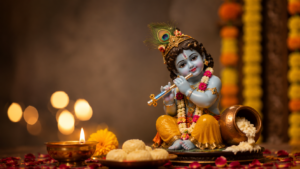
When Is Janmashtami in 2026?
Krishna Janmashtami will be celebrated on Friday, September 4, 2026.
The Ashtami Tithi begins at approximately 2:25 AM on September 4 and ends at approximately 12:13 AM on September 5. Rohini Nakshatra begins at around 12:29 AM on September 4 and continues until approximately 11:04 PM on the same day.
Since Lord Krishna is traditionally believed to have appeared during Ashtami Tithi, Rohini Nakshatra and Nishita Kaal, September 4 becomes the principal Janmashtami observance in 2026.
Devotees who observe the Janmashtami fast should therefore generally keep the Vrat on Friday, September 4, 2026, and celebrate Krishna Janma during the night of September 4–5.
Janmashtami 2026 Date and Important Timings
The main Janmashtami observance falls on Friday September 4, 2026. The fast will also be observed on September 4. Krishna Janma Puja will take place during Nishita Kaal on the night of September 4–5.
Ashtami Tithi begins at approximately 2:25 AM on September 4 and ends at 12:13 AM on September 5. Rohini Nakshatra remains from approximately 12:29 AM until 11:04 PM on September 4.
The following day, Saturday, September 5, 2026, will be associated with Nandotsav and Dahi Handi celebrations.
Is Janmashtami on September 4 or September 5 in 2026?
The main Janmashtami festival in 2026 is observed on Friday, September 4.
The confusion between September 4 and September 5 happens because Lord Krishna’s birth is celebrated around midnight, and the Ashtami Tithi continues for a short period after midnight into September 5.
The spiritual observance, fasting and Krishna Janma Puja are centred on September 4. The celebration then continues after midnight, and the joy of Krishna’s birth carries into the following day.
This is why Janmashtami is often experienced as a two-day celebration.
The first day, September 4, focuses on fasting, worship, bhajans, Abhishekam and the midnight Janmotsav. The second day, September 5, is associated with Nandotsav and Dahi Handi.
Some temples and religious traditions may follow their own sampradaya-based calendar, so devotees connected to a particular temple or Guru may prefer to follow that institution’s official schedule.
Why Is Janmashtami Celebrated Over Two Days?
Janmashtami is often celebrated over two days because the festival includes both the anticipation of Krishna’s birth and the joyful celebrations that follow His arrival.
On the first day, devotees observe Vrat, worship Bal Gopal, decorate Krishna’s Jhula, chant Krishna Mantras, sing bhajans and kirtans, visit temples, perform Abhishekam and remain awake until midnight.
The most important spiritual moment comes during Nishita Kaal, when Lord Krishna’s birth is celebrated.
In 2026, this primary observance falls on Friday, September 4.
The following morning is celebrated as Nandotsav, remembering the joy in Gokul after Krishna’s birth. In Maharashtra and several other regions, the second day is also associated with Dahi Handi, inspired by the childhood stories of Krishna stealing butter.
Therefore, September 4 is the main Krishna Janmashtami day, while September 5 continues the celebration through Nandotsav and Dahi Handi.
When Should Devotees Keep the Janmashtami Fast in 2026?
Devotees observing the traditional Krishna Janmashtami fast should keep the Vrat on Friday, September 4, 2026.
The day generally begins with an early morning bath, purification of the home and Puja area, followed by a Sankalpa, or spiritual resolve, to observe the fast and worship Lord Krishna.
Some devotees observe a strict Nirjala fast without food or water, while others follow a Phalahar fast and consume fruits, milk, curd, dry fruits, Makhana, Sabudana and permitted fasting foods.
The form of fasting can vary according to health, age, family tradition and personal spiritual practice.
The purpose of Janmashtami Vrat is not simply to avoid food. It is meant to help the devotee reduce distractions and remain focused on Krishna through prayer, meditation, bhajan, Kirtan and devotional reading.
When Should the Janmashtami Fast Be Broken?
Breaking the fast is traditionally known as Parana.
Different religious traditions follow slightly different rules regarding Parana. Some devotees break the fast after completing Krishna Janma Puja at midnight, while others wait until the following morning after the relevant Tithi and Nakshatra conditions have ended.
For Vrindavan in 2026, Parana is traditionally considered after approximately 6:00 AM on September 5.
If your family follows a particular Guru, Vaishnava Sampradaya, temple or regional Panchang, it is best to follow that specific tradition for Parana.
Janmashtami 2026 Nishita Puja Muhurat
Nishita Kaal is the most important period for Janmashtami worship because Lord Krishna is believed to have been born around midnight.
The exact Nishita Puja timing differs from city to city because Panchang calculations depend on geographical location.
For New Delhi, Nishita Puja is approximately from 11:57 PM on September 4 to 12:43 AM on September 5.
For Kolkata, the Puja Muhurat is approximately from 11:13 PM to 11:59 PM on September 4.
For Vrindavan, Nishita Puja is approximately from 11:56 PM on September 4 to 12:41 AM on September 5.
In Mumbai, the timing extends from approximately 12:14 AM to 1:01 AM on September 5.
For Bengaluru, it is approximately 11:55 PM to 12:42 AM, while in Chennai, it is around 11:45 PM to 12:31 AM.
Devotees should follow the Panchang of their own city rather than automatically using timings published for another location.
Janmashtami 2026 in Kolkata
For devotees in Kolkata, Janmashtami will be celebrated on Friday, September 4, 2026.
The local Nishita Puja period is approximately 11:13 PM to 11:59 PM on September 4.
Throughout the day, many temples and Vaishnava communities in West Bengal observe fasting, Krishna Puja, Bhagavata reading, Nama Sankirtan, devotional singing and special evening programmes.
At night, devotees gather for Krishna Janma celebrations, Abhishekam, Aarti and Prasad distribution.
Because Kolkata’s Nishita timing is earlier than cities such as Delhi or Mumbai, devotees in West Bengal should specifically follow local Panchang calculations.
Janmashtami 2026 in Mathura
Mathura holds extraordinary importance during Janmashtami because it is traditionally revered as the birthplace of Lord Krishna.
The Shri Krishna Janmabhoomi Temple becomes one of the main centres of celebration. Temples are decorated with flowers, lights and devotional themes, while bhajans and Krishna Kirtans continue throughout the day.
Thousands of devotees gather for special Darshan, Abhishekam and the midnight Janmotsav.
In 2026, the principal Mathura Janmashtami celebration will be centred on September 4, with Krishna Janma celebrated during the night of September 4–5.
Janmashtami 2026 in Vrindavan
Vrindavan is deeply associated with Krishna’s childhood, Radha-Krishna Leelas, Gopis, devotion and Bhakti traditions.
Temples such as Banke Bihari Temple, ISKCON Krishna Balaram Mandir, Radha Raman Temple, Prem Mandir, Radha Vallabh Temple and Radha Damodar Temple become major centres of celebration.
The day includes elaborate decorations, Kirtan, Darshan, devotional programmes, Abhishekam and midnight Krishna Janma celebrations.
In Vrindavan, Janmashtami 2026 will be observed on Friday, September 4, with Nishita Puja approximately from 11:56 PM to 12:41 AM.
What About ISKCON Janmashtami 2026?
In 2026, the principal Janmashtami observance at ISKCON Vrindavan is also listed on Friday, September 4.
However, individual ISKCON temples across India and abroad may publish their own detailed festival programmes.
Some temples may organise events over more than one day, including special Kirtans, Abhishek, cultural programmes, Prasad distribution and Nandotsav celebrations.
If you are planning to visit a specific ISKCON centre, it is advisable to check that temple’s official 2026 programme before travelling.
When Is Nandotsav in 2026?
Nandotsav will be celebrated on Saturday, September 5, 2026.
Nandotsav represents the happiness and celebration that followed Krishna’s birth in Gokul.
According to tradition, Nanda Baba celebrated the arrival of Krishna with great joy and distributed gifts.
This makes Nandotsav very different in mood from Janmashtami itself.
Janmashtami is about fasting, prayer and waiting for Krishna’s birth. Nandotsav is about celebrating that Krishna has arrived.
Mathura, Vrindavan, Gokul and the wider Braj region continue to remain highly festive on September 5.
When Is Dahi Handi in 2026?
Dahi Handi will be celebrated on Saturday, September 5, 2026.
It is particularly famous in Maharashtra, especially Mumbai, Thane, Pune and Nashik.
The celebration is inspired by stories of young Krishna stealing butter and curd from pots placed high above the ground.
Groups known as Govindas form human pyramids to reach and break the Handi suspended at a height.
The festival has grown into a major community celebration and is one of the most energetic parts of the Janmashtami season in Maharashtra.
Why Do We Celebrate Krishna Janmashtami?
Krishna Janmashtami celebrates the birth of one of the most beloved divine figures in Hindu tradition.
Lord Krishna is remembered in many forms: as the playful Makhan Chor, the beloved son of Yashoda, the protector of Vrindavan, the friend of the Gopas, the divine lover associated with Radha, the destroyer of Kansa and the spiritual teacher of the Bhagavad Gita.
His life represents joy, courage, wisdom, Dharma, compassion and spiritual knowledge.
For this reason, Janmashtami is not merely the celebration of a divine birth. It is also an opportunity to remember Krishna’s teachings and the eternal victory of Dharma over Adharma.
The Story Behind Lord Krishna’s Birth
According to Hindu tradition, Mathura was once ruled by King Kansa.
When Kansa’s sister Devaki married Vasudeva, a divine prophecy announced that Devaki’s eighth child would become the cause of Kansa’s downfall.
Terrified by the prophecy, Kansa imprisoned Devaki and Vasudeva and killed their children as they were born.
When the eighth child was due, Lord Krishna appeared at midnight.
According to the sacred narrative, the prison guards fell asleep, the locked doors opened and Vasudeva’s chains were released.
Vasudeva then carried baby Krishna across the Yamuna River to Gokul, where Krishna was exchanged with the newborn daughter of Yashoda and Nanda.
Krishna grew up safely in Gokul and Vrindavan and later returned to defeat Kansa.
Spiritually, the story represents the arrival of divine consciousness even in the darkest and most difficult circumstances.
Why Is Krishna Janma Celebrated at Midnight?
Lord Krishna is believed to have been born during Nishita Kaal, around midnight.
This is why the most important Janmashtami celebrations take place late at night.
At the moment of Krishna Janma, temple bells ring, conch shells are blown and devotees chant Krishna Mantras.
Bal Gopal may be ceremonially bathed with Panchamrit, dressed in beautiful clothes and ornaments, and placed in a decorated cradle.
Devotees perform Aarti, sing devotional songs and joyfully welcome Kanha.
The midnight celebration is the emotional and spiritual climax of Janmashtami.
What Is the Significance of Rohini Nakshatra?
Rohini Nakshatra has a strong traditional association with the birth of Lord Krishna.
In 2026, Rohini Nakshatra begins at approximately 12:29 AM on September 4 and ends at around 11:04 PM on the same day.
Since Rohini remains present for most of September 4, the day is considered especially significant for Krishna worship.
How to Observe Janmashtami Vrat
A meaningful Janmashtami Vrat should combine fasting with spiritual practice.
Devotees may spend the day chanting Krishna Mantras, reading the Bhagavad Gita, listening to Krishna Janma Katha, performing Seva, singing bhajans, attending Kirtan, meditating and preparing Bal Gopal’s Jhula.
Some families also decorate their homes with tiny Krishna footprints leading toward the Puja room, symbolising the arrival of Kanha into the house.
The deeper purpose of the Vrat is to reduce material distractions and devote the mind more fully to Lord Krishna.
What Can Be Eaten During Janmashtami Fast?
Food rules vary according to family and regional tradition.
Common fasting foods include fresh fruits, milk, curd, Paneer, Makhana, Sabudana, Singhara flour, Kuttu flour, potatoes, sweet potatoes, dry fruits, coconut and fasting preparations made with Sendha Namak.
Regular grains such as wheat and rice are generally avoided.
Many devotees also avoid pulses, ordinary table salt, onion, garlic, eggs, meat and alcohol.
People with medical conditions, elderly individuals, pregnant women, children or anyone taking regular medication should not follow a strict fast if it poses a health risk.
Devotion can also be expressed through a simple Satvik diet and sincere prayer.
How to Perform Janmashtami Puja at Home
Begin by cleaning the home and especially the Puja area.
Decorate Krishna’s Jhula with flowers, fabric and lights and place Bal Gopal or a Krishna idol in the sacred space.
Devotees observing the fast can take their Sankalpa in the morning and spend the day in prayer and devotional activity.
Offer flowers, Tulsi leaves, incense and Krishna Bhog.
Traditional offerings may include Makhan Mishri, fruits, Panjiri, dry fruits, milk preparations and Panchamrit.
At Nishita Kaal, Bal Krishna may be given a ceremonial Abhishekam using Panchamrit. He is then dressed in fresh clothes, decorated with ornaments and placed in the Jhula.
The family can perform Aarti, sing Krishna bhajans and gently rock the cradle as a symbolic celebration of Krishna’s birth.
What Is Panchamrit?
Panchamrit is a traditional sacred mixture generally prepared using milk, curd, ghee, honey and sugar.
It is commonly used during the Abhishekam of Lord Krishna on Janmashtami.
After the Puja, Panchamrit may be distributed among devotees as Prasad.
Why Is Makhan Mishri Offered to Krishna?
Krishna’s childhood stories frequently describe his love for butter.
This is why he is affectionately known as Makhan Chor.
Makhan Mishri, made with fresh butter and sugar crystals, is therefore one of the most popular offerings during Janmashtami.
The Bhog is not merely a food offering; it emotionally connects devotees with Krishna’s playful childhood form.
Why Is Tulsi Important in Krishna Worship?
Tulsi holds an especially sacred place in Vaishnava worship.
Devotees commonly place Tulsi leaves on Krishna’s Bhog because Tulsi is deeply associated with devotion to Lord Vishnu and Krishna.
For many Vaishnava families, offering Krishna’s food together with Tulsi is considered particularly auspicious.
Janmashtami Celebrations Across India
Janmashtami is celebrated across India, but every region gives the festival its own cultural identity.
In Mathura, the focus is on Shri Krishna Janmabhoomi and the midnight Janmotsav.
Vrindavan celebrates through temple Darshan, Kirtan, Abhishekam and Radha-Krishna devotional traditions.
Gokul becomes especially important during Nandotsav on the day after Krishna’s birth.
Maharashtra is famous for Dahi Handi, while Gujarat celebrates Krishna with great devotion in Dwarka and other major temples.
In West Bengal, Vaishnava temples and communities organise Nama Sankirtan, Bhagavata reading and Krishna worship.
In South India, the festival is also known by names such as Gokulashtami, Krishna Jayanthi and Sri Jayanthi.
Which Day Should You Visit Mathura and Vrindavan in 2026?
If you are planning a Janmashtami pilgrimage, it is better to consider September 4 and September 5 as a combined two-day experience.
On September 4, devotees can focus on Mathura Krishna Janmabhoomi, Vrindavan temples, Kirtans, Abhishekam and the midnight Janmotsav.
On September 5, visitors can experience Nandotsav, Gokul celebrations, morning temple programmes and other festivities following Krishna Janma.
Because the Mathura-Vrindavan region receives very large crowds during Janmashtami, travellers should check temple advisories, entry arrangements, local traffic rules and crowd-management instructions before visiting.
What Does Lord Krishna Teach Us?
The significance of Janmashtami becomes deeper when we reflect on Krishna’s teachings.
The Bhagavad Gita teaches the importance of performing one’s duty without unhealthy attachment to results.
Krishna also teaches balance, reminding us that success and failure are temporary and that inner stability is essential.
His life represents the protection of Dharma against injustice and encourages people to stand for what is right.
Krishna’s teachings on Bhakti also emphasise love, devotion and spiritual surrender beyond selfish expectations.
For seekers, Krishna represents a deeper understanding of the Self, Dharma and one’s relationship with the Divine.
The Spiritual Meaning of Krishna’s Birth at Midnight
Krishna’s birth carries a powerful symbolic meaning.
He was born in darkness, inside a prison, under the rule of a tyrant.
Yet when He appeared, the prison doors opened, the chains were released and a path to freedom became possible.
Spiritually, this can be understood as a reminder that even in the darkest phase of life, wisdom, faith and divine consciousness can create a path forward.
This is why Janmashtami is not only a celebration of joy. It is also a festival of hope.
Janmashtami 2026 Frequently Asked Questions
When is Janmashtami in 2026?
Krishna Janmashtami will be celebrated on Friday, September 4, 2026.
Which day should devotees keep the Janmashtami fast?
The principal Janmashtami fast should generally be observed on September 4, 2026.
When does Ashtami Tithi begin and end?
Ashtami Tithi begins at approximately 2:25 AM on September 4 and ends at approximately 12:13 AM on September 5.
When is Rohini Nakshatra in 2026?
Rohini Nakshatra begins at approximately 12:29 AM on September 4 and ends at approximately 11:04 PM on the same day.
What is the Janmashtami Puja time in Kolkata?
The Nishita Puja period in Kolkata is approximately 11:13 PM to 11:59 PM on September 4.
What is the Janmashtami Puja time in Delhi?
In Delhi, Nishita Puja is approximately from 11:57 PM on September 4 to 12:43 AM on September 5.
When will Janmashtami be celebrated in Mathura and Vrindavan?
The principal Janmotsav in Mathura and Vrindavan will be centred on September 4, with the midnight celebration continuing into September 5.
When is Nandotsav in 2026?
Nandotsav will be celebrated on Saturday, September 5, 2026.
When is Dahi Handi in 2026?
Dahi Handi will be celebrated on Saturday, September 5, 2026.
Why do some people mention September 5 for Janmashtami?
The confusion usually happens because Krishna Janma is celebrated around midnight and Ashtami Tithi continues shortly into September 5. Regional and sampradaya-based traditions can also produce different observance schedules.
Janmashtami 2026: Complete Summary
Krishna Janmashtami 2026 falls on Friday, September 4.
The main Vrat will be observed on September 4, and Krishna Janma will be celebrated during the night of September 4–5.
Ashtami Tithi begins at approximately 2:25 AM on September 4 and ends at 12:13 AM on September 5.
Rohini Nakshatra remains from approximately 12:29 AM until 11:04 PM on September 4.
Nandotsav and Dahi Handi will be celebrated on Saturday, September 5.
The exact Nishita Puja Muhurat varies according to city, so devotees should always check local Panchang timings.
Celebrate Janmashtami Beyond the Ritual
Janmashtami gives every devotee an opportunity to connect with Krishna in a personal way.
For children, Krishna may be the playful Laddu Gopal.
For devotees, He may be the beloved Lord of Vrindavan.
For spiritual seekers, He may be the divine teacher of the Bhagavad Gita.
For someone going through a difficult phase, Krishna’s life may become a reminder of courage, hope and Dharma.
This Janmashtami, decorate the Jhula, prepare Makhan Mishri, sing Krishna bhajans, observe the Vrat according to your capacity and celebrate Kanha’s birth with devotion.
But also take some time to reflect on Krishna’s teachings and ask how they can guide your own life.
That reflection can make Janmashtami much more meaningful than a ritual alone.
Celebrate the Divine Spirit of Krishna Janmashtami
This September 4, 2026, welcome Lord Krishna with devotion, gratitude and joy.
Whether you celebrate Janmashtami at home, visit a temple, join the midnight Janmotsav, travel to Mathura-Vrindavan or participate in Nandotsav and Dahi Handi the following day, allow the festival to remind you of faith, courage, selfless action and the timeless wisdom of Lord Krishna.
Discover More About India’s Festivals, Spirituality and Sacred Traditions